Showing posts sorted by relevance for query college. Sort by date Show all posts

Oct 29, 2021

Why We'll Pay for Our Kids' College Education + Tips for Paying for College Without Loans

My oldest child is now a junior in high school, so many of my friends also have juniors and seniors. Not surprisingly, a common topic of conversation is college. What does it take to get in, but especially, how are we going to pay for college?

Most of my friends seem to feel the same way I do: we'll pay as much as we can afford for college, but we don't want to take out loans, and we'd prefer that our children not take out loans either.

Some friends have saved some money in a 529 account, and don't intend to contribute any more toward their kids' college expenses. A few of my friends take a more hardline approach and have told their children that they won't pay for college at all. 

From talking to my friends and researching the subject, there are a lot of reasons why parents don't contribute, or contribute more, to their kids' college education. Among the most common reasons are: 
  • Not being able to afford it (and not wanting to take out loans themselves)
  • Feeling that graduation from high school is the demarcation for adulthood (therefore, college expenses are the student's responsibility)
  • Believing that kids need to have "skin in the game" - i.e., if they don't bear the financial responsibility of college, they won't take it seriously and will waste their time there
I think how a person grew up has to do a lot to do with how they view paying for college. Talking with other parents, it seems like those who had to pay their own way through college or couldn't afford to go (or didn't view it as an option for themselves) are more likely to think their children should at least contribute to their college expenses. Although there are parents who paid their own way who are happy to be able to pay for their children's education, because they remember how hard it was for themselves.


In my own family, my husband and I were both fortunate enough to have parents who paid in full for both of our college educations, and that's a big part of why we want to do the same for our own children. We know what a gift it is to be able to go to college and not have to worry about where the next tuition payment is coming from, and to graduate without any debt. We also know what carrying student debt feels like, because I took out loans to pay for law school.

We also remember how immature we were when we graduated from high school, and how college was an integral part of our maturation. Because of our own experiences, we really want our kids to have the opportunity to go away and live in a dorm their freshman year. 

Paying for college is obviously difficult, so we've been planning for many years now. We even refinanced our mortgage recently to bolster our cash flow. Nevertheless, we haven't saved up enough to pay for any college our kids might want to go to. So finances have been a part of the college conversation in our house from the beginning.

That's really important, because the last thing any parent wants is to never talk about money but then break their child's heart in April of senior year and say, "I know you worked really hard to get into College X but you can't go because we can't afford it." The better way to do things is to talk about cost before the student even starts putting together the list of schools where they'll apply. And then incorporate cost into the application process, so that the student isn't applying only to schools that are academic and social fits, but also a financial fit.

There's no way to know for sure if a school is a financial fit before you receive the financial aid package, but there are ways to roughly predict if a school will be affordable. Here are my best tips:
  • Start by assessing your finances. You can't know if a school is affordable if you don't know how much you can pay.
  • Determine your family's EFC, or Expected Family Contribution (soon to become the Student Aid Index in 2024). Read this discussion about EFC first so you don't go into shock when you do this.
  • Understand the different types of financial aid - schools may offer need-based financial aid and/or merit-based financial aid. There's more information in this post about paying for college.
  • Run a college's Net Price Calculator (NPC). Every college is required to have one on their website, so a search for the school name and "NPC" or "net price calculator" should take you to that page. Unfortunately, not all NPCs are built the same. In general, the more information the NPC asks for, the more reliable the result. Note that most NPCs don't seem to include merit scholarship information, so you'll have to dig deeper for those.
  • Create an account at TuitionFit. This is a new site and should become more reliable as more people use it. The site collects information from financial aid offers, so you can enter a student's stats and get information on the offers received by students with similar stats. The last time I checked, there was a free version and a premium paid version, but that was about a year ago when it first came out.
There are also paid services like Road2College's College Insights, which purport to show you which schools offer the best financial aid packages. I've followed the site's founder, Debbie Schwartz, for years, but I can't endorse the service since I've never actually used it (although I'm considering it for next year when my son is in application mode).

Of course, there's no way to know for sure how much a college will cost until a student is admitted and has received the financial aid package. I know families who have gotten shockingly generous aid that they didn't expect, and families who were deeply disappointed at the lack of aid offered. Again, the best thing you can do for your child is make sure they know that cost is a factor that has to be considered in deciding where they will ultimately attend.

Jul 8, 2023

Paying for College: Make a Four-Year Plan (at least!)

Since my oldest is heading off to college next month, I've been deep in the weeds of figuring out how we're going to pay for it. And one thing I've come to understand is how important it is to plan not just for this first year, but for every year that he's in college. On his college's parent Facebook page, I've been seeing posts from parents who are confused, so I thought a post about this topic would be timely.

Here are some things to think about when planning out how you'll pay for college:

- What is the actual cost of attendance?

Every college will list an estimated cost of attendance (COA) on its website, but now that your child has selected a school, you'll want to figure out what your actual cost will be. That estimated COA should be accurate as to tuition and room and board, but the estimate will probably be off for costs like transportation. If you live far away, you can expect to pay more; if you live close by, your cost may be less. Other costs to evaluate include loan fees (I see a lot of schools including this in their estimate and they may not apply to you if you're not taking out loans); health insurance (many schools automatically bill for this but you can get a waiver if your child continues to be covered by your family policy); and lab fees (you may be paying a lot of these if your child takes a STEM-heavy course load).

It may be difficult to figure out the final, actual cost of attendance at this point of the summer, but just know that the estimated COA on the college's website is not the exact amount you'll be paying.

- How long will your child be in school, and what will the total cost be?

Sometimes students can't graduate in four years and need an extra year. Hopefully my son will graduate in four years, but he'll have the option of staying a fifth year to get a master's degree. Graduate school, possibly in the form of law school, is also an option he's considering. These are factors to consider when planning out payments. With graduate school on the horizon, there's no pressure to spend out the college savings accounts. A friend's son changed his major after two years, so he spent a fifth year in college to get his degree.

It's important to remember that each year, the COA will go up. It goes up more at some schools than others - my son's college's COA went up about 5% this past year, while the COA at a friend's son's college went up less than 3%. So when projecting the total cost, you'll need to factor in year-over-year increases.

- What are your sources of funding?

College savings accounts like 529s and even "regular" savings accounts are obvious funds to tap to pay for college. So is your current income, which I'll refer to as cash flow.

But other sources of funding include Roth IRAs (earnings can be withdrawn without penalty to pay for qualified education expenses), U.S. Savings Bonds (if you qualify, you don't have to pay taxes on the interest), home equity, and other loans. As one personal example, we re-financed our mortgage a couple of years ago to lower our monthly payment and free up cash we could put toward college instead.

Keep in mind that you should always consider the pros and cons of using various funds to pay for college, especially the long-term consequences, such as the risk of losing your house if you fail to make home equity loan payments.

- Are there benefits to paying out of pocket?

Even if you have the savings to pay for a full year or a full four years of college in a tax-advantaged account like a 529, there may be reasons to pay at least some of the expenses out of "regular" savings or cash flow (i.e., out of pocket). The most common reason is likely to be the American Opportunity Tax Credit (AOTC), as long you qualify. I'm finding that things get tricky here: for AOTC purposes, qualified expenses are tuition, fees, books, supplies, and necessary equipment. Expenses don't include room and board, which are qualified expenses for other purposes like 529 accounts. For the maximum AOTC credit, you'll need to pay $4,000 out of pocket.

- Which savings should you use first?

You'll want to think about which accounts you want to empty out first. If you have younger children, any accounts that can't be redirected to them should probably be used first in case you're lucky enough to have money left over. In our case, our children have custodial 529 accounts whose funds can only be used by them, so we'll use those up before we tap 529 accounts.

If you have a Coverdell education savings account, you might want to use that up first because those funds have to be distributed when the beneficiary turns 30, unless the funds are transferred to a qualifying family member. (There are no such age restrictions on 529 funds.) 

If you have a college savings account and a Roth IRA, you'll probably want to use the college savings before tapping into retirement funds.

- Should you take out loans?

When deciding whether to take out loans to pay for college, always keep your eye on the total amount borrowed. A student who takes out the maximum federal loan each year (discussed below) will graduate with $27,000 in debt - that's a $293 monthly payment for 10 years at the 5.5% current interest rate. A parent who borrows $20,000 per year will have $80,000 in debt at the end of four years - that's a monthly payment of $973 for 10 years at the current 8.05% PLUS loan rate. You'll want to make sure any monthly payment is manageable before committing to loans.

Moreover, you might be able to pay for the current year of college, but what about later years? If you're likely to need loans to pay for future years, it might make sense for your student to take out the federal loan available to your student this year, because the loan won't be available in the future. 

To make sense of this, you should know that every student who files the FAFSA is eligible to take out a federal Direct Loan. Depending on your financial aid eligibility, the loan may be partly subsidized (meaning the loan does not accrue interest while the student is in school). The loan amounts vary by year: 

  • First Year - $5,500
  • Second Year - $6,500
  • Third Year and Beyond - $7,500
If a student opts not to take the $5,500 loan their first year, they can only take out $6,500 the next year (not $5,500 + $6,500 = $12,000). These federal loans are almost always the lowest-interest loans available, so it probably makes sense to take out the federal loan in the first year at that low rate (even if you have to pay the interest on the full amount), rather than take out $5,500 at a significantly higher rate in a later year.

There are loans available to parents, such as the federal Direct PLUS loan, and private loans (which will have the highest interest rates, and if you go this route, you'll definitely want to shop around for the lowest rate). Some families take out home equity loans or utilize a home equity line of credit, especially during times of low interest rates; just remember that you're borrowing against your home when you do this.

Another thing to keep in mind before you borrow is that the money needs to be repaid even if your student does not graduate, so if you're uncertain that your student will stick with college, it could make a lot of sense to make sure the school is affordable without loans.

- Do you have younger children who will also be attending college?

This question is especially important if you'll have multiple children in college at the same time, because unless you're paying for college entirely out of savings, your cash flow will be impacted when you have to pay for more than one student. You might decide to pay more out of pocket now and save the money in the college savings accounts for the overlapping years. Or you might realize you need to take out loans.

In fact, this question ties in closely with the previous question about loans because as a parent, you're probably not going to want to take out $20,000 per year for one child and then add on another $20,000 loan per year for another child. While this is a question that would hopefully be addressed before your child commits to a college that requires you all to take out significant loans, if you find yourself heading down this path, it's a good idea for a full stop and re-evaluation of your family's financial circumstances. Your options include contacting the college's financial aid office to see if they provide additional information, ideas or funding; taking a second job; having your student(s) work while attending school; or even having your child attend a different, cheaper college.

- Should you sign up for the college's payment plan?

Every school should have a payment plan to help you cash-flow your way through the payments.  The plan will allow you to make monthly (or at least some form of installment) payments instead of paying the full cost at the beginning of the term, and you can decide how much you want to pay monthly. For example, you might pay $10,000 before the semester starts, and then use a payment plan for the remaining balance. These plans are particularly helpful if you plan to cash-flow payments, but even if you're using savings, you can keep earning interest/income. There's often (but not always) a fee involved, and the amount varies by plan. Information about payment plans should be readily available on the college's financial services page.

PUTTING IT ALL TOGETHER

What works for one person doesn't necessarily work for another, but in my case, I started by creating a spreadsheet. I estimated the COA for future years at about a 7% increase per year, to be conservative. Then, for each year, I plugged in how much money we would use from each account to pay for college. Our kids have several different college savings accounts, so I figured out the order in which I wanted to use up the money, and estimated a very conservative growth amount for future years (since the investments are age-based, they are all conservatively invested, which protects the capital but minimizes growth). I also calculated how much we would be cash-flowing each term.

I'll be honest, it's a sobering exercise. But it gives me the peace of mind of knowing how we'll pay for four years of college, and especially, that we can do it. I don't have to worry that three years from now, I'll be pulling out my hair wondering where we'll find the money not just for my son's last year of college, but also his brother's second year.

I know this was a loooong post, but I hope it was helpful. If there's something you'd like me to discuss further, please let me know!

Apr 6, 2022

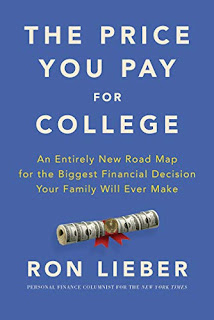
Book Review: The Price You Pay for College by Ron Lieber

This post contains affiliate links. Read our disclosure policy here.

I just listened to Ron Lieber's book, The Price You Pay for College: An Entirely New Road Map for the Biggest Financial Decision Your Family Will Ever Make. It's a great book, and one that every parent who wants their kid to go to college should read. I wish it had been around when my kids were little, or at least when they were in middle school. But even now, with as much as I've learned over the last five or so years, I picked up useful information that I'll be implementing immediately.

The book covers a lot of ground in five sections:

  • Part I: The Price and Cost of College and the Systems Behind It - This includes discussion about why college costs so much, an explanation about the FAFSA and EFC, and different kinds of financial aid.
  • Part II: The Unhelpful Feelings You May Feel - The feelings are fear, guilt, and "the pull of snobbery and elitism." 
  • Part III: Value - I loved this section, because it asks what is worth paying for, which will differ by family and student. Some families might find it worth paying for a women's college. Others might want to pay for small class sizes at liberal arts colleges. Still others might shell out for robust mental health programs, and so on. The chapters on different considerations contain questions to ask so you can get deeper than the college's public relations message.
  • Part IV: Money-Saving Hacks That Will Tempt You - The "hacks" include community college, honors colleges, college abroad, gap years, and athletic scholarships. I appreciated the hard truths in this section, such as the rarity of getting an athletic scholarship (particularly at one's first choice school), and the importance of immediately identifying one's desired four-year institution upon starting community college in order to be able to transfer in two years (you have to jump through the right hoops). I was pleasantly surprised by the data about gap years. The information in this section is all couched in terms of financial value, which is a different perspective than you'll find elsewhere.
  • Part V: The Plans - The plans include a "big financial plan," talking with your child about money for college, and "shopping" for college. There is also information on college savings plans, when and how to find professional help, appealing financial aid awards, and the basics of student loans. The chapter on "shopping" for college has some very practical tips that I hadn't come across anywhere else, which is saying something.
There is so much information in this book that after listening to it, I got the written version so I could easily make notes on the ideas I wanted to make sure I keep in mind. I especially wanted to get down the questions to ask of colleges to find out where they stand on the considerations that are important to my children and our family, and of course, the "shopping tips," including how to find merit aid data.

Because the focus is on paying for, rather than getting into, college, the book doesn't get into the nitty gritty of the application process. But it does cover a lot of the initial phases of the process, particularly list-building. (In college application parlance, "the list" is the list of colleges a student will be applying to.) For most families, I think this is one of, if not the most, difficult parts of the process because it's just hard to know where to start.

I had listened to a podcast about this book before I listened to the book itself, and there had been a mention that the book includes tips for talking with grandparents about whether they plan to help pay for college. I couldn't help but start at that chapter (Chapter 28, in case you're like me), but it turned out that the conversation was aimed primarily at parents of young children who were just starting out the college savings process. Which made me think at first that the book is aimed at new parents, but it's really not. 

Chapter 28 and Chapter 30 (which is all about 529 plans) are definitely relevant to parents with very young children. But the rest of the book is more useful to parents of middle schoolers and up, especially if money is an issue. Even if money isn't a factor, however, the book would be helpful in identifying schools that are a good fit for a student.

Verdict: I am adding this book to my list of must-reads for parents planning to send their children to college.


Nov 21, 2019

Paying for College IS the Goal

This post contains affiliate links. Read our disclosure policy here.

A couple of weeks ago, I explained that college is not the goal for my children, because what comes after college is even more important. But that said, for my husband and me, paying for college is a huge goal.

In fact, for the last couple of years, I’ve spent many hours learning about how people pay for college. And one of the the things I’ve learned is that there are as many views about parents paying for college as there are families.

My husband and I were lucky enough to have generous parents who paid for our undergraduate degrees. His even paid for law school, and mine provided much financial support while I got my J.D. So perhaps it’s not surprising that we want to pay for as much of our children’s educations as possible.

At the other end of the spectrum are parents who don’t want to pay a penny toward their children’s college educations. Maybe they can’t afford to, maybe they believe children should be independent upon graduating from high school, or any of a million other reasons.

I don’t think there’s a right or wrong way to parent in this regard, because every family is so different. But I do believe that all of our children can use our help in paying for college, whether it’s by paying the bills directly, or helping them figure out how to pay the bills themselves – or maybe both. Because I think one thing all parents can agree on is the less debt our children graduate with, the better.

Paying for College IS the Goal


If you agree with me, let’s talk about the ways we can help our children whether we are or aren't contributing financially toward their education (we’ll cover how to maximize our own financial contributions next week).

Have an honest talk.

Tell your child how much you are (or aren't) willing to pay for their college education. Of course, this requires that you yourself know what you're willing to do. For my husband and me, with our oldest being a high school freshman, the plan is to keep saving, pay as much as we can, help them earn scholarships, and identify schools that we can afford without anyone taking on any debt. Our children know this, and that their job, right now, is to earn good grades. We haven't talked specific numbers with them yet, but when it's time to make a list of which schools to apply to, we'll have a more detailed talk about how exactly how much we're willing to spend.

Make sure they earn good grades.

Not every student is going to get straight A's, but every student can maximize their potential. The higher their grades, the greater their chances of earning merit scholarships to reduce the cost of college.

Help them maximize their test scores.

There are many test prep courses, and you may want to pay for one. But you don't have to - there are free resources to help improve scores, including Khan Academy and study guides from the library.

Learn, and then teach, how the college financial aid system works.

Whether or not you intend to help your children pay for college, unless they meet specific criteria (such as being married or in the military), your finances will impact their financial aid eligibility. So you should both learn about the FAFSA, the CSS profile, how to understand a financial aid award letter, and more.

Help them find and apply for scholarships.

Unless your child gets a full ride from a college, there will still be expenses. But it's possible to get outside scholarships that can cover those costs. There are books, websites, webinars, and free and paid courses that can help you and your student find scholarships that they actually have a realistic chance of winning. One of the best pieces of advice I've seen in this regard is for the student to apply for one scholarship every weekend during senior year of high school. You might also want to read and/or have your child read Confessions of a Scholarship Winner: The Secrets That Helped Me Win $500,000 in Free Money for College - How You Can Too!. If you're serious about finding scholarships, this book is full of strategies that will help.

Assure them that college is about more than the reputation and status of the school.

Read, and encourage your student to read, books like Where You Go Is Not Who You'll Be: An Antidote to the College Admissions Mania and Debt-Free U: How I Paid for an Outstanding College Education Without Loans, Scholarships, or Mooching off My Parents. Both of these books opened up the way I think about college, and I highly recommend them.

Jul 21, 2020

A Checklist to Help You Help Your Kids Attend College

If you've been following Chief Family Officer the last year or two, you know that I've been thinking about sending my kids to college for a while now - especially how they'll get in to the schools they want to go to, and how we'll pay for it all as a family. I have two kids, and a lot of thoughts.

A little background:

My oldest is heading into his second year of high school, making him a "rising sophomore" in college admissions parlance. My younger son will be an eighth grader.

This is not too soon to be thinking about college, even for my younger son. Just read what I wrote last year about two books that opened my eyes to new ways to think about preparing for college.

In case you have an older child, let me assure you that it's also never too late to think about college. The more you know, whatever stage you're at, the more you can help your child. But it is a lot easier if you start early.


As you look at this list, keep in mind that it's a list that's designed for my family, our finances, and our goals - which are (1) for the kids to attend colleges where they'll have a great experience, and (2) for no one in our family to go into debt to pay for their educations. Your own finances and goals will likely result in your family taking a different direction than ours. But this checklist can help you get started.

The Checklist
  • Learn the basics of college finances. There's a lot to know - merit versus need, FAFSA, EFC, CSS, and much more. Last fall, I summarized some things you should know about paying for college. 
  • Learn the basics of college admissions. The Princeton Review has a decent overview of the college admissions process.
  • Read my reviews of Where You Go Is Not Who You'll Be and Debt-Free U. They'll help you approach the actual college search and admissions process from the best starting place.
  • Figure out your best basic options. For example, use a free online EFC calculator to get an estimate of what your EFC will be. Research scholarship opportunities at your public colleges (e.g., some state schools offer free tuition to students who meet specific criteria, like National Merit Finalist; in Los Angeles, many high school graduates can take two years of community college classes for free). Figure out if you'll qualify for the Pell grant.
  • Learn, learn, learn! Once you know the basics, keep researching. Attend free webinars to hear from experts about their particular view on paying for college, writing essays, extracurricular activities, and more. Research schools using the Common Data Set and determine where your child is likely to get in and receive merit scholarships. I share webinars from experts I like on the CFO Facebook page, and I highly recommend the Paying For College 101 Facebook page.
  • Create a budget/plan to pay for college. Depending on the age of your child, this might be an estimate or it might be an actual budget. Even though my children aren't quite ready to apply to college, I've run some numbers just to estimate how much I think we'll be able to pay out of pocket without going into debt. This will be hugely helpful in creating a college list.
  • Talk honestly with your children. Be upfront about your financial situation, how much you're willing to pay, and what their responsibility will be. Talk about shared goals, like graduating without debt, and explain why debt can be a debilitating burden. You and/or they might have to take out loans anyway - but at least have the talk so everyone goes in with eyes wide open. The situation you want to avoid, if at all possible, is telling your child out of the blue that they can't go to their dream school because it's too expensive.
  • Keep researching. As this pandemic year has shown, the college admissions process can change in an instant. Many schools have suspended or eliminated the standardized testing requirement, tours are canceled, and many families are questioning what the right thing to do is right now. I'm even convinced that things won't be "back to normal" even when my older son graduates from high school in three years, because the budget cuts that are happening now will have reverberating effects down the line. The best we can do is take in as much information as possible so we can make the best decisions possible when the time comes.

What else should be on this checklist?

Mar 29, 2025

College Admissions: Perspectives for Parents from a Parent-Counselor

It's that time of year when high school seniors have been notified whether they've been admitted to a college and now they have to decide where they're going to attend. It's my second time sitting in the parent chair (my first as a certified college counselor) and I have thoughts:

1) Early admission is awesome if your student is a strong candidate. I knew my younger son was a great candidate for merit scholarships because he had excellent grades and high test scores, and I was right. He got into many schools and received fantastic merit scholarship offers that are, frankly, necessary for us to be able to afford these schools. These early notifications of admission helped all of us breathe a little easier.

However, there are good reasons not to apply early. These include wanting senior year's first semester grades to be considered as part of the application, and not submitting rushed essays. 

2) Not getting in is frustrating. It's baffling who gets in and who doesn't, even to college counselors. Students (including my own children) who I thought were shoe-ins have been waitlisted or even denied admission.

One California student is suing the UC system alleging that the only reason he didn't get in was race. I don't see how he can prevail, though. He was denied admission at the five most competitive campuses, and they all review applications holistically. The lawyer in me says there's no way he can prove that the admissions committees had no reason other than race for not offering admission. Off the top of my head, I'd speculate that his essays were less than compelling and/or his activities were limited (the article mentions he founded a software company while still in high school, but doesn't mention anything else). Plus, the student's major, computer science, is consistently one of the most competitive majors to get in to.

There is no transparency in the college admissions process, so students never know why they weren't admitted. The article says the student's attorneys want to force the UCs into transparency. (So does the federal government.) I think transparency would be great, but even if they get it, I don't think they're going to find what they're looking for. Admissions officers constantly disagree about who to admit, and race doesn't have to come into it.

While I'd love to know why my kids and the students I've worked with weren't admitted to certain schools where I know they were strong candidates, I have to accept that I never will. And I can live with that, because they all got into other excellent schools and will thrive where they eventually end up.

3) You probably won't have to pay the full cost of attendance. This is almost certainly true if the cost of attendance is significantly more than your SAI (formerly known as the EFC). Even colleges that don't meet a student's full need will usually offer some need-based aid. And those merit scholarships I mentioned? They can make private schools cost less than state schools. 

However, the changing DOE landscape and possible changes to federal aid availability will likely change things at the institutional level. There is a lot of uncertainty because of this. That means it's extra important to not only choose an affordable college but to make sure you understand your financial aid package and its components. This includes knowing what is required to maintain merit scholarships, how much of your package is need-based aid that might not be available in the future (contact the college's financial aid office), and what loans you might need to take out in order to graduate. (See Joe Messinger's thoughts about this too.)

4) There just isn't enough information about how to pay for college. The only reason I was prepared when my older child went to college was that I'd been educating myself for years. Affordability is as important a consideration in deciding where to apply for college as academic and social fit.

Families need to use net price calculators, take a good hard look at their finances, and have honest conversations about what's affordable. They also need to file the FAFSA in a timely manner, find out if there's any state aid available, and plan for how they're going to pay for college before their student commits to a school. Do some research - I just talked to a parent of a senior who had never heard of California's Middle Class Scholarship.

Admittedly, most people won't find this fun (I do, but I'm nerdy that way). But it's how families can make sure they can afford colleges that are a good fit for their student.

5) Make sure you understand what you're getting into if you take out student/family loans. The standard advice is to limit the total amount borrowed to what the student expects to earn in their first year after college. For example, if the student plans to be a teacher earning $60,000 right after graduation, they shouldn't borrow more than $60,000 during college. That's a total of $60,000, or $15,000 per year.

If parents are going to borrow money, they should make sure they're not sacrificing their own financial well-being to do so. You won't be able to borrow money to pay for your retirement, and you'll be paying back loans.

If you do decide to borrow money, be aware of the different types of loans available. In general, loans from the federal government will have the lowest interest rates. Direct subsidized loans will be interest-free while the student is still in college, so those should always be the first loans taken out.

With the changing economic and educational climate, I think it's worth considering taking out any subsidized loan while it's available if you think there's any chance you'll need to borrow money to pay for college. Hopefully, you'll be able to pay the loan back immediately upon graduation, so it won't have cost you anything and you'll have some extra breathing room in your finances.

6) Preparation for paying for college should start well before senior year of high school. In fact, I want to get elementary and middle school parents thinking about it, because they can open 529 accounts and save, if nothing else. (California's 529 program has offered free money for opening an account around May 29 in past years.)

Once a student enters high school, parents can start to estimate how much they can pay every month or year for college. This can help narrow choices - for instance, it might become clear that most out-of-state public colleges will be too expensive (those schools usually don't provide a lot of aid to out-of-state students). Or families might realize that a student isn't going to get a big enough scholarship at, say, USC (where the cost of attendance for 2025-26 is over $99,000 😮).

And as a student approaches senior year, families can make good use of net price calculators to guesstimate how much a particular college might cost their family. The more info a calculator asks for - such as GPA and test scores - the more accurate it's likely to be. As a student figures out which colleges are appealing, families can use net price calculators to refine their college list.

7) Some colleges understand how to use their portal better than others. If a college sends a student an email after they apply with instructions on how to create a portal account to check on the status of their application, the student should absolutely do so as it's the best way to ensure that all application materials have been received and to see the admission decision when it's available.

But there was one college my son decided not to attend, and he couldn't submit his decision in that original portal - they wanted him to create a university portal using a university email account, and that required multi-factor authentication ... in other words, a lot of effort just to say "no thank you." Needless to say, I could easily understand why students don't tell colleges they're not coming even when it's the right thing to do. (My son sent an email to the admissions office, asking them to withdraw his application. They haven't confirmed receipt, but I consider his responsibilities fulfilled.)

8) Colleges send a lot of emails. Email is the primary way colleges contact students, and they send important emails like requests for additional documents, decision notifications, financial aid award notifications, scholarship info and even info like reimbursement of travel expenses if you visit the college.

But colleges also send lots of emails that say "check this out" and "about our ___" and "did you know?" All of these emails go to the same email account that the important emails get sent to. One of the colleges my son got into in November sent a dozen emails that said "haven't heard from you yet, are you coming, not coming or do you need more info?" What he needed was time, to decide which of the schools that admitted him is the best fit.

Understandably, it's hard for a student to keep track of all these emails. So I highly recommend not just creating a free email account that's used just for college, but also forwarding those emails to a parent's account so the parent can help make sure students catch all the important emails. 

9) It's hard to let the student drive the college decision process, but it's important to do so. I'll admit, I've struggled from the beginning with striking a balance between telling and listening. I have a lot of information to share, but he doesn't necessarily want to hear it. In all honesty, I'm still not quite sure how we came up with the list of colleges he ended up applying to, but I think it was a good mix of me saying "consider these schools" and him coming back with "I like these two but not the rest." At least, I hope that's how he remembers it, too.

Now I'm struggling not to pressure my son to tell me what he's thinking. He has over a month to make up his mind, and we still have three schools to visit. So I have to keep reminding myself that he can't make up his mind yet, and he doesn't have to tell me what he's thought so far. 

Just as important, I keep reminding myself not to tell him what I'm thinking. We discuss facts, which is how we've eliminated several schools from his list - their cost of attendance (to us) is significantly higher that of other colleges he's gotten into. But my husband and I are both refraining from expressing opinions. Our son is the one who will be spending the next four years in college, and where he goes needs to be his choice. 

Do you have questions or advice about college admissions?

Sep 1, 2020

Helpful Resources to Learn About the College Admissions Process

My oldest is now a high school sophomore, and I've been researching the college admissions process for a few years. (Read my previous posts on the topic.) I thought it would be helpful to share the resources I've come to rely on. For most of these, I've subscribed to their email newsletters. I attend some of their free webinars. And I have thought about hiring a few of them when application time rolls around.

Paying for College 101 - This is a Facebook group, so you can't take everything at face value. Many of the answers are wrong. But many of them are helpful, and people ask questions that wouldn't have occurred to me but are issues to consider. The "Files" section is full of useful spreadsheets, lists, and more. It can be difficult and overwhelming to parse all of the info that passes through this group, but I've learned more here than from any other one source.

Road2College - This is the website for the creator of the Paying for College 101 Facebook group, Debbie Schwartz. She publishes helpful articles, and has a few tools that I am considering paying for in a year or two.

Lockwood College Prep - Andy Lockwood and his wife are consultants who focus on the financial side of the college admissions process, but seem to have their hand in every pie, like essays and testing. His free webinars are a fantastic source of info, and he offers various free PDFs that are worth reading.

Way to the Quad - Peg Keogh is a college financial planning consultant with a wealth management background. She periodically does free webinars, which are worth attending.

The College Essay Guy - Ethan Sawyer focuses on helping college applicants with their essays, but he's also just super smart with positive, value-driven messages. He regularly offers "pay what you can" courses and free resources for counselors. There are a lot of free resources for students and parents on his site too.

Shemmassian Academic Consulting - Shirag Shemmassian is another super smart guy, and he's written a comprehensive free guide on the admissions process. He also publishes useful info on his blog.

Julie Kim Consulting - Julie Kim specializes in helping students get into their dream college by creating a "passion project." Her approach reminds me a lot about the message I took from these books.


College Admissions Toolbox - Steve Schwartz focuses on essays, and his email newsletter is full of tips and examples.

Capstone Wealth Partners - This company is another one that focuses more on paying for college than anything else. Their newsletter usually covers useful topics.

JLV College Counseling - Jessica Velasco shares lots of info about outside scholarships. Her newsletters include lists of them.

Get Ahead of the Class - Denise Thomas also focuses on scholarships, and might be particularly helpful to homeschoolers.

The Scholarship System - Jocelyn Paonita Pearson focuses on outside scholarships, and I appreciate her emphasis on graduating debt-free. I think she was the first person to make me realize that you can apply for scholarships while you're in college.

Creating Positive Futures - Dr. Maggie Wray coaches high school and college students to be their best. While she doesn't focus on college admissions, I find her posts to be relevant and helpful in a general, positive way.

Do you have a favorite resource I haven't mentioned? If so, please share!

Sep 9, 2021

How to Enroll in Los Angeles Community College Courses While You're in High School

Are you a high school student in Los Angeles, or do you have a child who is? If so, did you know that you can take community college courses for free?

I've helped my son through the process several times now, so I've put together a step-by-step guide to walk you through the process.


1. Create an OpenCCC account here. You’ll receive a CCCID number, which you'll need for the next step. 

2.  Apply to the community college that you want to attend at LACCD.edu. A few days after you’ve submitted the application, you’ll receive an email with your Student ID number and LACCD email account info, which you’ll use throughout your community college experience. 

3. Activate the Student Portal. The login information will be in an email you receive after submitting your application. 

4. Submit your K-12 Form for dual/concurrent enrollment using the college’s website. You'll be directed to an online portal called Dynamic Forms (search the college's website for a page for high school students or dual/concurrent enrollment). The K-12 form must be submitted each term at each college you plan to attend. Once the student completes and submits the K-12 form, their parent/guardian will receive an email and need to electronically sign it. The form will then be submitted to the high school counselor. Once the counselor has signed it, the form will be submitted to the college. Once you receive the email that says “Your school has completed their portion” of the K-12 form, you are able to enroll in the classes listed on the form. 

5. Clear any prerequisites. If you want to take a course that has prerequisites that you took in high school, know that those need to be cleared separately from your K-12 form before you will be allowed to enroll in the class. Each college has its own way of clearing prerequisites, so you'll need to search check their website. 

Other things to know:

  • Once you have an LACCD Student ID number, you can take a class at any of the Los Angeles community colleges without re-applying. Just log into the Student Portal and click on manage classes. You'll be able to search for a class at any of the LACCD colleges.

  • You need to complete a new K-12 form each semester or summer session, and you'll need a separate K-12 form for each college you attend. For example, if you want to take a class at Pierce College and another class at Valley College in the same semester, you'll need to fill out K-12 forms at both of those schools.

  • If you want to talk to someone at a college, use the Online Services & Chat link in the Student Portal. LACCD uses a system called Cranium Cafe, and it actually works well once you get used to it. Depending on your needs, you can choose to chat with someone in a specific department. If you need to talk to someone about your K-12 form, chat with someone in Admissions and Records. If you need help clearing a prerequisite, chat with someone in the Counseling department.

  • You can take classes for free! As a high school student taking community college classes, you don't have to pay for tuition, but you may have to pay for books. 

  • Keep in mind that unless the textbooks/material are digital, it can take some time to get them, whether you order them from the college bookstore, Amazon, or elsewhere. Textbook information is often listed in the Details section when you look up a class in the "Manage Classes" section of the Student Portal.

  • Information listed here is subject to change, so you should always check with the college and/or your high school counselor for the latest.

Oct 27, 2008

This year's most expensive colleges

This is timely, in light of this morning's post on paying for private university: CampusGrotto has a list of the most expensive colleges for the 2008-2009 school year.

Here's the top 10 for tuition only:
  1. Bates College - $43,950
  2. Middlebury College - $42,910
  3. Colby College - $42,730
  4. Union College (NY) - $40,953
  5. Connecticut College - $40,900
  6. George Washington University - $40,392
  7. Vassar College - $39,635
  8. Sarah Lawrence College - $39,450
  9. Bucknell University - $39,434
  10. Colgate University - $39,275

And here's the top 10 for tuition plus room and board:
  1. Sarah Lawrence College - $53,166
  2. George Washington University - $50,312
  3. New York University - $50,182
  4. Georgetown University - $49,689
  5. Connecticut College - $49,385
  6. Bates College - $49,350
  7. Johns Hopkins University - $49,278
  8. Skidmore College - $49,266
  9. Scripps College - $49,236
  10. Middlebury College - $49,210
Here's a list of the 100 most expensive schools by tuition. And here's a list of the 100 most expensive schools by total cost.

In case you were wondering, the school my dentist's daughter is attending is not in the top 10, but is in the top 25. Yikes!

Via The Consumerist.

Nov 25, 2019

Things to Know about Paying for College

As I said previously, college isn’t the real end goal, it’s getting out of college with the ability to go forth and have a happy and productive life.

A big part of that is not having debt upon graduation. Consequently, over the last couple of years, I’ve become obsessed with paying for college. I’ve learned a ton, and I think we’re going to be okay, if our kids do their part and get good grades and build strong resumés so they can get into schools that we can afford.

The thing is, there's so much information out there, and even with as much as I've learned, I feel like I'm never going to know everything and I worry I'll miss something important. That said, I want to share what I've learned in the hopes that it will help you figure out your family's path on this journey. Just keep in mind that I'm not an expert.

Things to Know About Paying for College


It's never too early or too late to start saving for college. I like the target funds in 529 accounts, since they manage the investment risk for you, and 529 accounts have some tax advantages (see below). If your child is already in high school, I recently heard one expert say that it's not too late - if you can set aside some money and leave it there until the last year of college, that's still four to eight years that the money is growing.

There are many ways to stash money away for college. 529 and Coverdell Education Savings Accounts are tax-advantaged plans for saving for college. In a nutshell, you contribute after-tax money to the accounts, and they grow tax-free. (After-tax money just means money you've already paid income tax on.) As long as you use the money to pay for qualified education expenses (like tuition, books, and room and board), you never have to pay income tax on the earnings. Some states give state income tax breaks on their 529 accounts; unfortunately, California isn't one of them.

Income earned via certain U.S. savings bonds is also tax-free when used for qualified education expenses. Certain withdrawals from IRAs accounts may also be made tax and/or penalty-free if used to pay for qualified education expenses. And of course, you can always save money in a regular savings account, although you'll miss out on the tax savings if you go this route.

Most families get some financial aid. That's right, the vast majorities of families don't pay the "sticker price" for college. But financial "aid" includes many different forms.

The "sticker price" for a college is known as the "cost of attendance" (COA) and generally includes tuition, fees, books, room and board, transportation, and personal expenses. Some of these costs are inflexible, like tuition. But you have some flexibility with costs such as transportation - if you live close to a school, the transportation costs may fall below the estimated amount, but if your child has to fly across the country, your costs might be higher than the estimate.

Don't forget to file the FAFSA. If you went to college, you might remember the FAFSA, or the Free Application for Federal Student Aid. You input data like your income and savings, then the information is sent to the schools you list on the application, and each school makes its own determination as to what financial aid package it will offer your student. Even if you don’t qualify for need-based aid because your income is too high, many schools won’t award merit-based aid without a FAFSA on file, so everyone should submit the FAFSA.

After you file the FAFSA, you'll find out your "Expected Family Contribution" (EFC), which is the amount the federal government determines you can afford to pay for college. Be prepared - it may shock and upset you with how high it is. I’ve heard some low-income folks have an EFC under $100. But I’ve also heard people say their EFC was more than half of their family’s annual income.

There are lots of EFC calculators online if you're not at the point of filing the FAFSA. They may not be entirely accurate, but they should give you a ballpark idea of what your EFC will be. Your EFC shouldn't change based on how many children you have in college. For purposes of calculating financial aid at each school, it basically gets divided equally amongst the kids.

Your child should have as few assets as possible. For purposes of the FAFSA, assets held by parents are assessed at a lower rate than assets owned by a dependent child (5.64% versus 20%). If your child has money in a UTMA or UGMA account, do something to get the money out of their name and into your name. Note that you can’t simply transfer the money from their account to yours, since legally it's theirs and has to be used for their benefit. Consider rolling the funds into a custodial 529 account, which is like any other 529 account, except that it can't be transferred to another family member if your child doesn't use the funds for college. (Even if it's in their name, it gets assessed like a parent-owned asset.)

Make sure you understand your own assets. The FAFSA doesn’t consider your home equity to be an asset. But some private schools require a second financial aid application called the CSS (College Scholarship Service) Profile, which asks for a lot more information and takes your home equity into account in evaluating your ability to pay.

Neither the FAFSA nor the CSS Profile considers your retirement investments (such as your 401(k)) as an asset that can be used to pay for college. However, their calculations will take into account your retirement contributions (i.e., they assume that you can use those funds to pay for college instead of saving for retirement).

If you have a lot of money stashed away in non-retirement savings, consider spending it sooner rather than later. Don't spend foolishly, but if you've been saving money for a new car or a kitchen remodel, spend the money before you file the FAFSA, since it asks for current account balances.

"Financial need" is the difference between the COA and your EFC. Some schools meet 100% of financial need, and some don't.

There are many types of financial "aid." Financial aid can include need-based scholarships and merit-based scholarships, which don't need to be paid back. The major difference is that you don't have to have a financial need to get a merit-based scholarship (schools may consider grades, test scores, special talents, and more in awarding merit scholarships). Financial aid can also include work-study (i.e., the student earns money by working at an on-campus job) and loans (federal and private).

Loans are considered a form of financial aid. In case you missed it above, I want to highlight that loans are considered a form of financial aid. So if your financial need at a school is $10,000, the only "aid" you might get is the ability to take out $10,000 in loans.

Be cautious of student loans. The total student loan debt is now over $1.5 TRILLION. Make sure you and your student know the monthly payment you are contemplating taking on. For example, the current interest rate on an undergraduate Stafford loan is 4.529%. If you graduate with $100,000 in debt and choose a 30-year term (assuming you’re given the option), your monthly payment will be over $500 – and you’ll be paying it off for as long as most people pay for a mortgage. If the loan term is just 10 years, your monthly payment will be over $1,000. Your child would have to earn an impressive annual salary to make their student loan payment and pay for living expenses. No wonder so many adult children end up living with their parents!

It’s never too early or too late to look for private scholarships. Some students are more motivated than others, but there are scholarships for just about every age (even four-year-olds and those already in college) and every niche.

Divorce, separation, and remarriage can substantially complicate matters. If the adults involved don’t have a clear understanding of what each person/family is going to contribute, it might be best to hire a professional.

Speaking of professionals, be sure to hire an expert in this field. If you're going to hire a professional, make sure you find someone with experience and/or a specialty in educational finance. "Regular" accountants and CPAs may not know all that much about paying for higher education. And as with all financial experts, make sure you know how they're getting paid - a fee-only professional is usually a better choice, because they don't get paid for recommending or selling specific investment vehicles.

I covered a lot of ground, but there's also a lot I didn't cover. Let me know if there's something you want to know more about, and I'll do my best!

Aug 27, 2026

Getting Ready to Apply to College 2026

Students are heading back to school, and a certain group of students known as high school seniors are about to enter an incredibly busy season. Not only do they have difficult classes (AP Calc kicked my butt back in the day), but it's also time to start applying to college. So here are a few tips for seniors that they might hear repeatedly or that might be new to them. And I've got some tips for parents too. 

  • Check in with your counselor. It might be the college counselor or your guidance counselor, depending on your school's staff, but someone is going to be writing you a recommendation. It can be brief and superficial, or it can be in-depth and personalized. It's in your best interest to make sure your counselor knows you. Your counselor might even offer to let you have input on the recommendation they write for you. And do everything you can to make it easier for them, like completing a brag sheet.

  • Ditto regarding the teacher you asked for a recommendation. Unless none of the schools you apply to require a teacher recommendation (for example, you're only applying to public colleges in California), you'll need at least one (some colleges require two or even three). Hopefully you asked a teacher before junior year ended but if you didn't, now's the time! And if you did, now's the time to check in with that teacher. Ask what they want from you. If they are vague, you can offer to complete the Common App's brag sheet.

  • Apply to a range of schools. Apply to your dream school for sure - but if it's an Ivy or other super selective school, be realistic about your chances of getting in (for every 100 kids who apply - and almost all of them will have equally competitive applications - less than 10 will be admitted). So make sure you also apply to schools that are likely to let you in (which is actually most of the colleges in the U.S.).

  • The range concept also applies to affordability. Apply to USC, where the cost of attendance is over $100,000. But run their net price calculator so you know what to expect in terms of a financial aid package. And apply to other schools that you know your family can afford. (I have an upcoming post on that topic.) The key, however, is to make sure that every school that you apply to is one you'd be happy to attend if it's the only one that admits you.

  • Know your deadlines. Every college has its own application deadline, and you absolutely need to get your application in on (and preferably before) that date. But the financial aid application probably has a separate deadline and you don't want to miss that one either. (Also, it's best to get the FAFSA done earlier rather than later in case you're applying to a college that doles out aid on a rolling basis.) There may be other deadlines too - for scholarship applications, audition-based majors and more. Make sure you know when things are due.

  • Some of my favorite FREE resources where they've probably answered any question you might have:

    - Getting In: A College Coach Conversation podcast: I've been a listener for years, and the experienced college admissions professionals on this podcast offer a wealth of information on just about any college-related topic you can think of.

    - College Essay Guy: While CEG's greatest area of expertise is the essay, you'll find free resources related to the entire application.

    - uAspire: They nail down the basics of financial aid, including a helpful checklist and links.

    - California Student Aid Commission (CSAC): For California residents, CSAC is crucial. They have all the info on California's state aid, such as the Cal Grant and Middle Class Scholarship. Most of the top in-state private schools are participating institutions, so eligibility isn't limited to those attending a UC, CSU or community college.

  • Tips for parents:

    - Let your student lead. We are not applying to college, they are. While you are a huge part of it, especially when it comes to money, it's their life. Ask them what they want from you. Something that works for many families is scheduling a weekly conversation about college applications, and avoiding the topic the rest of the week.

    - Speaking of money, have "the conversation" early. Now is the time to let them know what you can afford, what you are willing to pay, and how much you expect them to contribute. Don't find yourself in late April breaking your child's heart by telling them that you can't afford their first choice school. Make them aware of that possibility now, and let them know that they need a scholarship to make it affordable.

    - Also related to money: Prepare to file the FAFSA and, if necessary, the CSS Profile. Know what information you'll need to fill out the forms, such as which account balances you'll need to report (but you'll want to check those balances on the day that you're completing the FAFSA, not today). If you have a business that you'll need to include as an asset, make sure you know the valuation or get one now. Get your FSA ID now if you don't already have one (you'll need it to log in to complete and sign the FAFSA). Help your student get theirs because they'll need their own FSA ID. 

    - Make sure your student knows how proud you are of them, that you understand how stressful the application process can be, and that you're there for them. The best thing one of my kids said to me when I mentioned how scary heading off to college can be and that it's ok to struggle was But I know I have you and Dad always. That sense of security and love will get them through anything.

Do you have any college application-related questions that you want me to address?

Mar 15, 2018

How to Send Your Kids to College Without ANY Debt (my new financial goal)

I recently read a fantastic book called Debt-Free U: How I Paid for an Outstanding College Education Without Loans, Scholarships, or Mooching off My Parents, and it's helped to change my thinking about college. First off, I am now absolutely determined to send my boys to college without any of us taking out loans. Second, I am convinced that it will be possible to do so.

How to Send Your Kids to College without ANY Debt

That said, I realize there will likely be compromises that need to be made, the biggest one being that they may not be able to attend their first-choice school. But that's a bridge we'll cross when we come to it. My kids are in seventh and fifth grade right now, so we're not even close to drawing up lists of schools to consider.

If you want a more detailed discussion of Debt-Free U, check out my other site, LAUSD Magnet Schools. Here, I'll share a few things that are logical first steps in preparing to pay for college.

Learn how the system works. If you went to college, you might remember the FAFSA, or Free Application for Federal Student Aid. It's the one financial aid application you pretty much have to fill out in order to get any kind of financial aid for college and grad school.

A key concept related to the FAFSA is EFC, or Expected Family Contribution. Based on the information you provide on the FAFSA, you'll get an EFC, which is the amount the government says you should be able to pay that year for your child's education. Low-income families can have a low EFC, which helps them get more financial aid. But it seems like middle-class families and even many lower-income families are assigned EFCs that are unrealistic. I just read about one single mother with a $65,000 annual salary who has an EFC of $40,000! I am expecting our EFC to be painfully high and that we will therefore be ineligible for any need-based financial aid.

One other note: "Financial aid" includes loans. As in, when you get the financial aid package from a school, explaining the aid they are giving, it frequently includes loans as a form of "aid." For example, if the total cost is $30,000 and your EFC is $10,000, they might give you $10,000 in need-based scholarship aid, and $10,000 in loans. I know student loan debt is often touted as "good" debt, much like a mortgage, but Debt-Free U makes some compelling arguments about why that's not the case. This Forbes article explains why parents especially shouldn't take out loans to help their kids.

Merit scholarships do exist. They might be difficult to come by, but they are out there. However, you have to earn them. I've been learning about what that takes, and not surprisingly, a lot of it comes down to good grades and high test scores. It also helps to do volunteer work and be passionate about something. Of course, it's a difficult balance between encouraging your kids and stressing them out too much. I try to remember to emphasize that my kids should do their best, and that effort matters more than results (and that when you put in the effort, the results usually come).

Save, save, save! I wish California had a pre-paid tuition option for state schools, because I'd be all over that. It's a big enough state that I wouldn't feel bad about telling them they have to stay for undergraduate work, at least - they can still get plenty far away enough from home. Unfortunately, all we have is a 529 plan. Which, of course, we are contributing to. But balancing college savings and retirement savings is tricky, to say the least.

There are a lot of schools out there. Until I started talking with friends who have high schoolers and recent grads, I'd never heard of a couple of schools that are less than 40 miles away from my house. One of my friends hired a private college counselor, who helped her son find some smaller schools that they wouldn't have known about or considered (in addition to helping him write his essays and get his applications in).

High school counselors don't know a lot about paying for college. I'm sure there are a lot of great high school counselors out there, but I'm also discovering that many focus solely on helping your child get into a school, and completely ignore the financial aspect of the process.

There are some really nice financial breaks available to California residents at UC schools. I don't know if we'll qualify for any of them, but I want to spread the word about them because if you're eligible, they can be a huge help!

This post contains affiliate links that help support this site at no additional cost to you. Thank you for using them! You can read CFO's full disclosure here.

Nov 7, 2019

College is NOT the Goal

I do a lot of research on the topic of parenting, because being the best mother I can be is incredibly important to me. And it seems like every other article, blog post and podcast I come across is directly or indirectly about the stress and anxiety that teens feel.

Some teens feel incredible pressure to perform at school - to get straight A's, take the most rigorous courses offered at their school, and make sure they can check all the right boxes about extracurricular activities on their college applications. Some teens feel a tremendous amount of social pressure - to have the "right" look and the "right" friends. And of course, some teens feel both kinds of pressure and more.

One of my favorite sites is Growing Leaders, where Tim Elmore writes often about the struggles young people deal with today. And one of my favorite authors, Rachel Macy Stafford, often talks about teens and their mental health, and she just wrote a book for teens, although I can't find direct reference to it on her website.

My oldest son just started high school, and I know he's already feeling the pressure to perform academically. He's always been an outstanding student, but now the grades really matter, because they'll be part of his college applications.

College is NOT the Goal

For my part, I've been thinking about college for a while now, and while I've mostly focused on how to pay for my kids' educations, a big factor in the financial side of things is their academic performance in high school, because it can result in merit scholarships.

One thing I realized as I started my research is that it's important to think beyond the goal of getting into college. Because that’s not really the end goal. The real long-term goal is about helping my kids set themselves up for a productive and happy future.

I’m sure that means something different for every family, but for ours, it means graduating from college with little to no debt, and in a position to embark on a career they’re excited to pursue. As we start the high school journey, I want to keep reminding my son that while the portfolio he’s building for his college application is supremely important, it’s not the ultimate goal.

If we get to his senior year and he doesn’t get into his first-choice college, I don't want him to feel like his entire life is now a failure. Conversely, if he does get into his first-choice school, I don't want him to feel like he’s fulfilled his life's purpose.

In essence, I don’t want getting into college to be more important than it should be.

If you have a high school student, how do you handle all the stress and anxiety?

Jun 1, 2018

What You Do Matters More than Where You Go - Parenting

For the last few years, I've been reading a lot about millennials, Generation Z, kids who feel entitled, helicopter parents, and so on. It's been a mild cause for concern, in a distant sort of way.

But I just finished reading Frank Bruni's excellent book Where You Go Is Not Who You'll Be: An Antidote to the College Admissions Mania, and I have to admit that I saw myself in many of the stories he told.

What You DO Matters More than Where You GO

I may not have the money of a family that sends their children to an elite prep boarding school for tens of thousands of dollars a year, takes "service" vacations so their children can say on their college application that they did volunteer work in a third world country (apparently that's a real thing), or spends thousands more dollars on SAT prep and private college counselors.

But I am the parent who examined matriculation lists to see where a high school's graduates went to college. I wrote off a prominent local Catholic high school because I was unimpressed by their matriculation list - not just no Ivies, UCLA or Stanford, but no Notre Dame or Boston College either. The high school I've chosen routinely sends their alumni to all the UC's, a few Ivies, CalTech, and Stanford.

I've been determined that my children get straight A's, because anything less than an unweighted 4.0 GPA means the top schools won't even consider them. Part of my determination stems from the fact that I know they are capable of excelling in school. But it also means that I've been afraid that any little misstep might derail their future.

It turns out I'm not alone. Where You Go is Not Who You'll Be is filled with stories about parents like me. Our intentions are good - we're just convinced that the way to succeed in life is to do really well in high school and then graduate from a well-known, highly-respected college.

But I'm not convinced anymore. Now I'm convinced that success isn't dependent on where you go to college but on how much you put into it, and how much you get out of it. It's about going to a school where you can thrive, not about the name of the school on your diploma. Hawaii State Senator Kai Kahele gave an inspiring commencement speech at Hawaii Community College in Hilo about why he had to start at HCC (spoiler: he wasn't exactly stellar in high school) and how he'd turned his life around just a few years later:


In case you didn't watch the video above, here's the quick summary: Pete Velasco, a former U.S. Olympics men's volleyball captain, took 19-year-old Senator Kahele under his wing and trained him to be such a good a volleyball player that he went on to play for the University of Hawaii at Manoa, where he went to multiple national championship games. But even more than volleyball, Coach Velasco taught Senator Kahele the value of hard work, the necessity of being willing to fail, and the joy of helping someone else succeed.

This story could fit right in with the anecdotes in Where You Go. My favorite story from the book was about Bobbi Brown, the makeup artist and businesswoman, who wanted to drop out of the University of Arizona. But her parents wanted her to at least get a degree, so her mom asked her what she would do if she could do anything, and Brown said she would play with makeup at the department store makeup counters. Her mom then helped her find a school where she could study makeup, which is how she ended up at Emerson College, where they allowed her to design her own major in the theater department.

I love that story not just because it's about someone who became super successful taking an untraditional path. I love it mostly because of the understanding and compassion that Brown's mother demonstrated. She helped her daughter find a path that worked for her.

One of the recurring themes in Where You Go is about how students who follow the seemingly ideal path of excel in high school, go to elite college are afraid to color outside the lines. They meet a successful person and want a step-by-step guide on how to emulate them. This makes perfect sense to me because I think to a large degree, this was my path. It wasn't quite as difficult to get into the top colleges when I was going through the application process, and the industry that has grown around it didn't yet exist to the degree that it does now.

But I went to an elite private high school that sends its alumni to the Ivies and other top public and private institutions. And I remember my college counselor recommending that I go to a smaller private school, where I could shine, which in retrospect was excellent advice. I rejected it, and instead went to a larger private university with a student body of over 10,000 (and the only school that didn't offer me any scholarship money - sorry, Mom and Dad). I chose the school because I loved the campus and I thought I would have lots of opportunities. I even got into the honors program.

But maybe that was the mistake, because what I realize now, with the benefit of hindsight, is that although I was smart, I wasn't as smart as many of the other students. So I faded back instead of flourishing, and while I did fine, graduated with a relatively high GPA, and went on to an excellent law school, I do think about what might have happened if I'd taken my counselor's advice and gone to a smaller, less selective school.

Where You Go is full of stories about such students, who didn't get into the top schools and so ended up at smaller, less exclusive schools where they found themselves to be standouts. I am now open to the possibility that my children might be better served by following the example of these students than by following in my footsteps.

I've been a regular reader of Tim Elmore's Growing Leaders blog, which is about helping students succeed and become leaders. A main recurring message is that we have to let them do for themselves, and let them risk failure. I also recently finished reading How Luck Happens: Using the Science of Luck to Transform Work, Love, and Life, which defines luck as the intersection between talent, chance and hard work. And one of the messages of Where You Go is Not Who You'll Be is that hard work trumps the name of the school on your diploma.

I feel like I'm being pounded over the head with the message that the main lesson I should be teaching my children is to work hard. Not get good grades, not check off the boxes for your college application, and definitely not you can't make a mistake or get a B.

Hard work is something they can control. If they give it their all and they fail, at least they'll know they did everything they could. And hard work will serve them well throughout their lives, regardless of where they go to school or what they end up doing for a living.

This is something that I think parents know instinctively to be true, but it's something that we find difficult to teach. But it may be the most important lesson we can pass on.

This post contains affiliate links that help support this site at no additional cost to you. Thank you for clicking through them! You can read CFO's full disclosure here.